What was teletext?
Before the web, there was teletext: pages of news, weather, sport and simple blocky graphics — sent through the air with the TV picture and read on the telly at home. If you grew up online you may never have seen it. This is the calm, finite thing that CALMFAX is built to bring back.
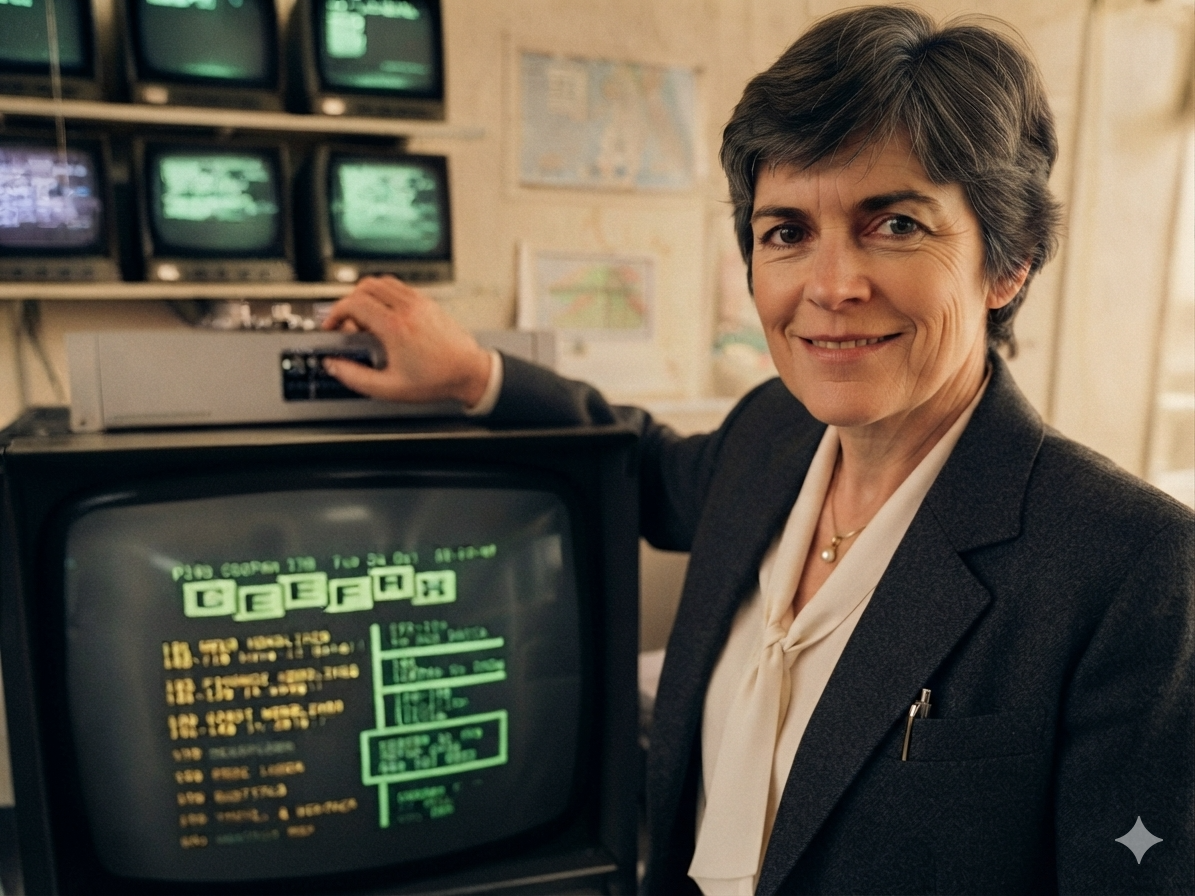
A magazine hidden in the TV signal
A television picture doesn't use every part of its signal. Engineers realised the spare, unseen lines at the top of each frame could carry data — so they used them to broadcast pages of text alongside the normal programmes. Your TV quietly collected those pages, and when you typed a number, it showed you the one you asked for.
The BBC launched the world's first teletext service, Ceefax, on 23 September 1974. The name is simply "see facts". ITV followed with its own service, Oracle, later run as Teletext. For nearly forty years, this was how millions of people checked the headlines, the forecast and the football scores.
How you used it
- Type a page number. You keyed a three-digit number on the remote — 100 was the index — and waited a moment for the page to come round and appear.
- Follow the coloured buttons. Later sets had red, green, yellow and blue "Fastext" keys that jumped straight to related pages, so you rarely had to remember a number.
- Read it, then leave. There was a fixed set of pages with an end. You caught up in a minute or two and got on with your evening.
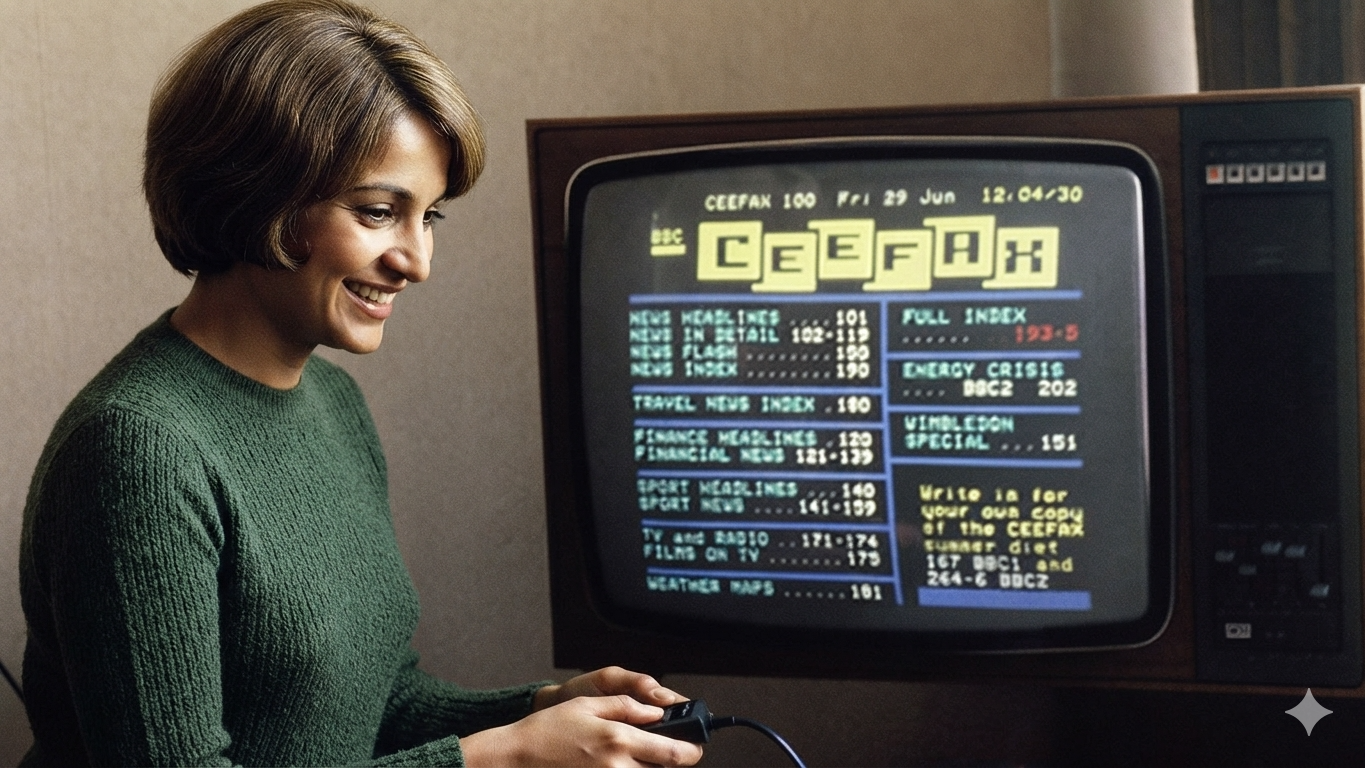
Text, seven colours and little blocks
Every page was a small grid — 40 characters across by 24 rows down — in a chunky monospaced font. There were seven bright colours plus black, and no photographs: pictures were drawn from tiny rectangular block graphics, six little cells to a character, which artists used with real ingenuity. No images to load, no video, no sound — just calm, instant pages.
What was on it
Nearly everything you might want at a glance: news and weather, sport, TV listings, share prices, holiday deals, recipes, jokes and horoscopes. Page 888 carried television subtitles. There were even games — quizzes and simple adventures played entirely in text and blocks. It was the ambient, unhurried internet before the internet reached most homes.
Why it went away
Teletext depended on the old analogue TV signal. As the UK switched off analogue and moved to digital between 2008 and 2012, teletext lost its home. Ceefax ended on 23 October 2012, when the very last analogue transmitter was switched off — a quiet close to the world's first teletext service. Many people still remember its calm, and miss it.
Why CALMFAX brings it back
CALMFAX is a modern, web-based tribute to that idea. It keeps the look — the black screen, the bold colours, the block graphics and the live clock in the header — and, more importantly, it keeps the feeling: a finite set of pages you can read in about ninety seconds, then close. Your weather, your chosen headlines, a daily quiz and a moment of calm. No infinite feed, no notifications, no algorithm deciding what comes next.
You even get a page of your own to write — a real teletext page, built cell by cell, just like the artists of the 1980s. It's nostalgia for some and a discovery for others, and it's free at heart.